Reiki Healing vs Pranic Healing – Key Differences
If you have ever tried alternative medicines or energy based therapies, there’s a possibility you might have come across both Reiki and Pranic Healing. To look at, they may appear similar as both work with the body’s energy field and focus on promoting healing and wellbeing. Moreover, neither of them involves medication or physical manipulation. But when you look at them closely, you will find significant differences between them.
Getting to know what sets these two practices apart can help you make a confident choice about which path is good for your personal health goals along with spiritual beliefs and day-to-day lifestyle. This guide will cover the origins, core techniques, and practical differences between Reiki and Pranic Healing. Thus, providing you with everything you need to decide which is one is the right fit for you.
What is Reiki Healing?
Reiki is a Japanese energy healing technique developed in the early 20th century by Mikao Usui. The word Reiki originates from two Japanese words – Rei means universal and Ki means life energy. This implies the core belief that a universal life force flows through all living beings. When that energy becomes imbalanced, illness and emotional distress can follow.
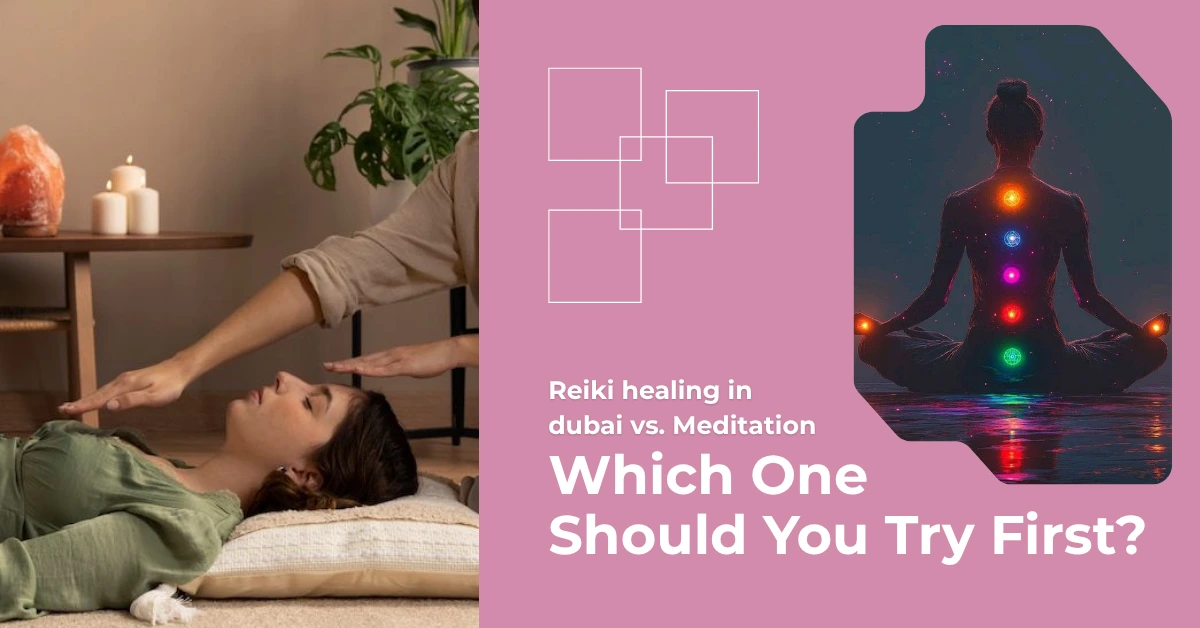
In a Reiki session, a trained practitioner channels this universal energy through their hands, either by gently placing them on specific areas of the body or hovering just above it. The practitioner acts as a conduit, allowing healing energy to flow naturally to wherever it is needed. Sessions are typically gentle, deeply relaxing, and last between 45 and 90 minutes.
Reiki is widely practised in wellness centres, hospitals, and private clinics around the world. It is most commonly used to reduce stress, ease anxiety, support emotional healing, improve sleep quality, and complement conventional medical care as part of a broader holistic approach.
What Is Pranic Healing?
Pranic Healing is a modern energy healing system developed by Grand Master Choa Kok Sui in the 1980s. It is rooted in the concept of prana, the Sanskrit word for life force and is based on the principle that the body has the innate ability to heal itself once its energy field is properly cleansed and replenished.
Unlike Reiki, Pranic Healing is a strictly no-touch therapy. Practitioners work within the energy body, or aura, that surrounds the physical body. The process involves two core steps: scanning the aura to identify congested or depleted energy centres, and then cleansing and re-energising those areas using specific hand movements and colour prana.
Pranic Healing also works extensively with chakras and includes advanced branches such as Pranic Psychotherapy and Arhatic Yoga, making it a broad, structured system rather than a single standalone technique.
Reiki vs Pranic Healing – Key Differences

1. Origin and Founder
Reiki was founded by Mikao Usui in Japan in the 1920s, drawing on Buddhist traditions and personal spiritual revelation. Pranic Healing was developed by Grand Master Choa Kok Sui in the Philippines in the 1980s, drawing on ancient Indian, Chinese, and Tibetan healing concepts with a modern, systematic framework.
2. Touch vs No-Touch
One of the clearest distinctions is physical contact. Reiki practitioners use gentle hand placement on or just above the body during sessions. Pranic Healing is a no-touch practice, the practitioner works entirely within the energy field without any physical contact whatsoever.
3. Source of Healing Energy
In Reiki, healing energy is drawn from universal life force, channelled through the practitioner. In Pranic Healing, the practitioner uses specific types of prana including ground prana, air prana, and solar prana and directs them intentionally into the patient’s energy body for targeted results.
4. Use of Colour Energy
Pranic Healing incorporates colour prana, where different coloured energies serve specific healing purposes. Electric violet is used for cleansing, while green prana supports physical healing. Traditional Reiki does not use colour-based energy in a structured way.
5. Cleansing Before Energising
A fundamental Pranic Healing principle is that congested energy must be removed before fresh energy is introduced. This cleansing step is built into every session. In Reiki, the focus is on channeling energy without a defined cleansing phase first.
6. Structure and Approach
Pranic Healing is highly structured, with defined protocols for treating specific conditions, organs, and emotional issues. Reiki is comparatively more intuitive and fluid, with practitioners following the energy naturally rather than adhering to rigid treatment steps.
7. Training and Attunement
Reiki practitioners receive energetic attunements from a Reiki Master, believed to open their energy channels for healing. Pranic Healing training is technique-based, focusing on developing aura sensitivity and mastering cleansing and energizing methods rather than receiving an energetic initiation.
8. Spiritual Dimension
Both practices carry spiritual elements, but differently. Reiki has deep spiritual roots tied to Japanese Buddhist and Shinto traditions, with compassion and intention at its heart. Pranic Healing includes a spiritual path via Arhatic Yoga but presents itself as a practical, science-oriented system that is independent of any specific religious belief.
Also Read the Difference between Reiki Healing and Sound healing
Which One Is Right for You?
Choosing between Reiki and Pranic Healing comes down to personal resonance. If you are drawn to a gentle, touch-based experience with deep spiritual roots and a calm, meditative atmosphere, Reiki is likely the better fit. Its intuitive, flowing nature suits those who prefer a more relaxed, personally guided session where the energy directs itself rather than following fixed steps.
If you prefer a structured, protocol-driven approach that works entirely without physical contact, Pranic Healing may suit you better. Its scientific framing and systematic methods appeal to those who like to understand exactly what is happening during their healing session.
Both are safe, non-invasive, and complement conventional medical treatment effectively. Neither requires you to follow a specific religion or spiritual path. The best way to truly decide is to experience both, many wellness centres, holistic clinics, and independent practitioners offer introductory sessions for both modalities, giving you a firsthand feel for how each one resonates with your body and mind.
Read about the Energy Healing Process in Detail.
Frequently Asked Questions
What is the main difference between Reiki and Pranic Healing?
Reiki channels universal energy through gentle hand placement, while Pranic Healing is a no-touch system that scans, cleanses, and energises the aura using specific prana types.
Is Pranic Healing better than Reiki?
Neither is objectively better. Reiki suits those preferring an intuitive, touch-based approach, while Pranic Healing appeals to those who favour a structured, no-touch, protocol-driven healing system.
Can both practices be used together?
Yes. Many practitioners and clients combine both modalities successfully. They complement each other well, both working toward restoring energetic balance and overall wellbeing.
Do both Reiki and Pranic Healing involve physical touch?
Reiki may involve light hand placement on the body. Pranic Healing is strictly no-touch, the practitioner works exclusively within the energy field above the physical body.
How many sessions are needed to notice results?
It varies by individual and condition. Some notice shifts after a single session, while others benefit from a consistent series of four to six sessions for deeper, lasting results.
Are these therapies safe to use alongside medical treatment?
Yes. Both are non-invasive and considered safe for most people as complementary therapies. They should support professional medical care for serious conditions and never replace.